David Rose: Founder and Visionary
The Man Behind the Park
David B. G. Rose was born in Louisville, Kentucky, in the mid-1860s and established himself as a successful businessman and entrepreneur long before Rose Island opened its gates.
Business Empire
By the early 1920s, Rose was a prominent figure in Louisville's business community. His primary enterprise was the Standard Printing Company, where he served as president. Beyond printing, Rose maintained documented business interests across multiple industries, with ties to twenty-six different corporations over the course of his career.
His involvement with the Louisville & Jeffersonville Ferry Company proved instrumental to the creation of Rose Island. With a deep understanding of river transportation and regional tourism patterns, Rose recognized an opportunity others overlooked: building a destination resort that could succeed regardless of how visitors arrived.

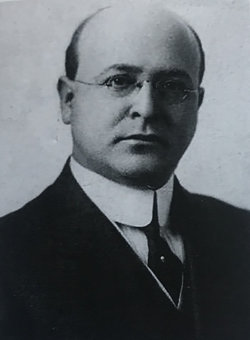
David B. G. Rose
The Rose Island Vision
In 1923, Rose and his wife of twenty-seven years, Esther, purchased the 118-acre Ohio River peninsula then known as Fern Grove from the Louisville & Jeffersonville Ferry Company for $30,000, with a $10,000 down payment and a $20,000 mortgage. The property had previously operated as a modest church camp and picnic grounds, but Rose envisioned something unprecedented for rural Indiana—a full-scale resort capable of competing with urban amusement parks.
Rose began limited operations under the Rose Island name while initiating major construction in March 1924. Over the next fifteen months, he invested an additional $220,000 in development, bringing his total investment to approximately $250,000 (roughly $4.4 million in today's dollars). These funds financed modern infrastructure throughout the park, including upgrades to the existing hotel, a filtered swimming pool, twenty rental cottages, a large dining hall and dance pavilion, a complete electric lighting plant with an illuminated whiteway, and a range of amusement rides.
Contemporary newspaper accounts document ferry steamers transporting workers, construction materials, and even a portable sawmill to the site.
The grand reopening in June 1925 marked the completion of the resort as Rose had envisioned it.
Note: Rose Island's opening date is often cited as 1923, 1924, or 1925. Contemporary newspaper evidence supports a phased development: land acquisition in 1923, major construction beginning in March 1924, and the formal reopening of the completed resort in June 1925.
Innovation and Marketing
Rose approached the park with theatrical flair matched by disciplined business strategy. He marketed Rose Island as a place of "exceptional purity," from its filtered swimming pool to a cold-water fountain supplied by the park's ice house and promoted as an underground aquifer. Practical infrastructure and promotional storytelling worked together, reinforcing the park's identity as a modern, wholesome destination.
When the Municipal Bridge connecting Louisville to Indiana opened in 1929, threatening ferry-dependent amusement parks, Rose Island's destination-based model proved resilient. Visitors came for the experience, not merely convenience.

Vintage newspaper advertisements promoting steamboat excursions to Rose Island, featuring the Steamer America and Steamer Idlewild.
The Great Depression Years
Rose Island continued seasonal operations throughout the Great Depression, a period during which more than eighty percent of American amusement parks closed permanently. From 1923 through 1936, the park adapted to economic pressures while maintaining its identity as a regional resort.
The 1937 Flood
On January 27, 1937, the Ohio River crested at 85.4 feet, the highest level ever recorded. Rose Island was completely submerged, with floodwaters reaching as high as twenty-five feet in some areas. Virtually all structures, rides, and infrastructure were destroyed.
Rose Island never reopened.
Later Years
United States Census records from 1930 and 1940 document Rose's continued residence in Louisville at a prestigious address, with household staff that included a live-in maid and butler. His occupation is consistently listed as president of Standard Printing Company.
David B. G. Rose's obituary, published in The Louisville Courier-Journal, occupied nearly half a page and detailed his extensive business connections, civic involvement, and continued corporate leadership well into his eighties.
David B. G. Rose died in Louisville in 1958, twenty-one years after the flood. His wife Esther had predeceased him in 1947, after more than fifty years of marriage.
Primary Sources
The documented history of David Rose is drawn from:
- United States Census Records (1900, 1910, 1920, 1930, 1940)
- Property deeds and legal documents related to the Rose Island purchase (Jeffersonville, 1923)
- The Courier-Journal, March 19, 1924, Page 5, "Amusement Park Started"
- Louisville city directories and business registries
- Louisville Courier-Journal archives and obituary records
- Historical records maintained by the Clark County Historical Society
The complete story of David Rose and Rose Island, including personal accounts from the families who built and operated the park, is told in The Rose Island Story.