
Rose Island, Indiana: The Complete History
Located on a peninsula formed by the 14-Mile Creek and the Ohio River near Charlestown, Rose Island, Indiana was the premier Midwestern "summer resort" of the 1920s and 30s.
Originally known as Fern Grove, it was transformed by D.B.G. Rose into a high-capacity amusement park featuring a swimming pool, hotel, dancing pavilion, and mechanical rides. Far from a small local carnival, it saw over two million visitors during its fourteen-year peak.
Timeline of the Rose Island, Indiana Legacy
1880s – 1922: Fern Grove Era
Operating as Fern Grove, a popular church picnic and steamboat excursion site.
1920 – 1923: David Rose's Vision
David Rose, rumored to have visited Fern Grove several times, makes offer to purchase the park and is turned down.
1919: The Bridge That Changed Everything
Planning of a new bridge and highway that will cross from Louisville to Charlestown take place. Signals that the ferries that bring guests to the 3 amusement parks (Rose Island, Fontaine Ferry Park, and White City) may be in jeopardy.
1923: The Purchase
David (D.B.G.) Rose and wife Esther Rose purchase the Fern Grove property for $30,000 (not $250,000 as widely reported). The additional $220,000 was the cost of upgrading and transforming into Rose Island. Source: https://www.newspapers.com/article/the-courier-journal/187487315/
1924: The Ferris Wheel Arrives
The Eli Bridge Company Ferris wheel is installed, standing 65 feet tall.
February 25th, 1924: The Ohio Falls Incident
David Rose and 7 other men go over the Ohio Falls in a 35-foot boat, in a blinding snowstorm after the engine dies and they strike a pier piling. The men were on the way to Rose Island to select sites for the dance and food halls. All survived uninjured. Source: https://www.newspapers.com/article/the-courier-journal/186033828/
March 1924: Construction Begins
Construction starts on Rose Island. Equipment transported to site includes a small sawmill. Work included upgrades to the hotel and construction of an electric lighting plant and icehouse. https://www.newspapers.com/article/the-courier-journal-rose-island-amusemen/186030464/
1925: Grand Opening
Rose Island opens on June 7th after transformation completed, including a new food hall, dance hall/pavilion, and more. https://www.newspapers.com/article/the-courier-journal-rose-island-opening/187488081/
1929: Black Tuesday & The Bridge
Oct. 29th: Black Tuesday. The stock market crashes, signaling the start of the Great Depression.
Two days later, Oct. 31st: The Louisville Municipal Bridge is dedicated by President Herbert Hoover and opened, connecting Louisville, Kentucky to Charlestown, Indiana.
1930: The Roses Thrive
Census records show David and Esther Rose living at their prestigious Louisville address, managing a thriving business empire. Not alone or living in the bedroom of a friend's apartment.
1933: Warning Sign
Louisville/Southern Indiana flood serves as a warning of what's to come.
1937 (January): The Great Flood
The Great Flood crests at 80 feet, submerged the park, and effectively ends operations.
1939: Lions Club Effort
Lions Club starts effort to purchase Rose Island for an Indiana State Park.
1940s: Government Acquisition
The U.S. government acquires the land for the Indiana Army Ammunitions Depot.
1948: David Rose Retires
At age 73, David Rose retires after an amazing career heading 20+ companies including Standard Printing and Rose Island.
1958: David Rose's Passing
June 21st: David Rose passes away after a stroke.
1996: Charlestown State Park Opens
Oct. 7th: Charlestown State Park opens at the former location of Rose Island. Source: https://en.wikipedia.org/wiki/Charlestown_State_Park
2011: The Bridge Returns & Public Access
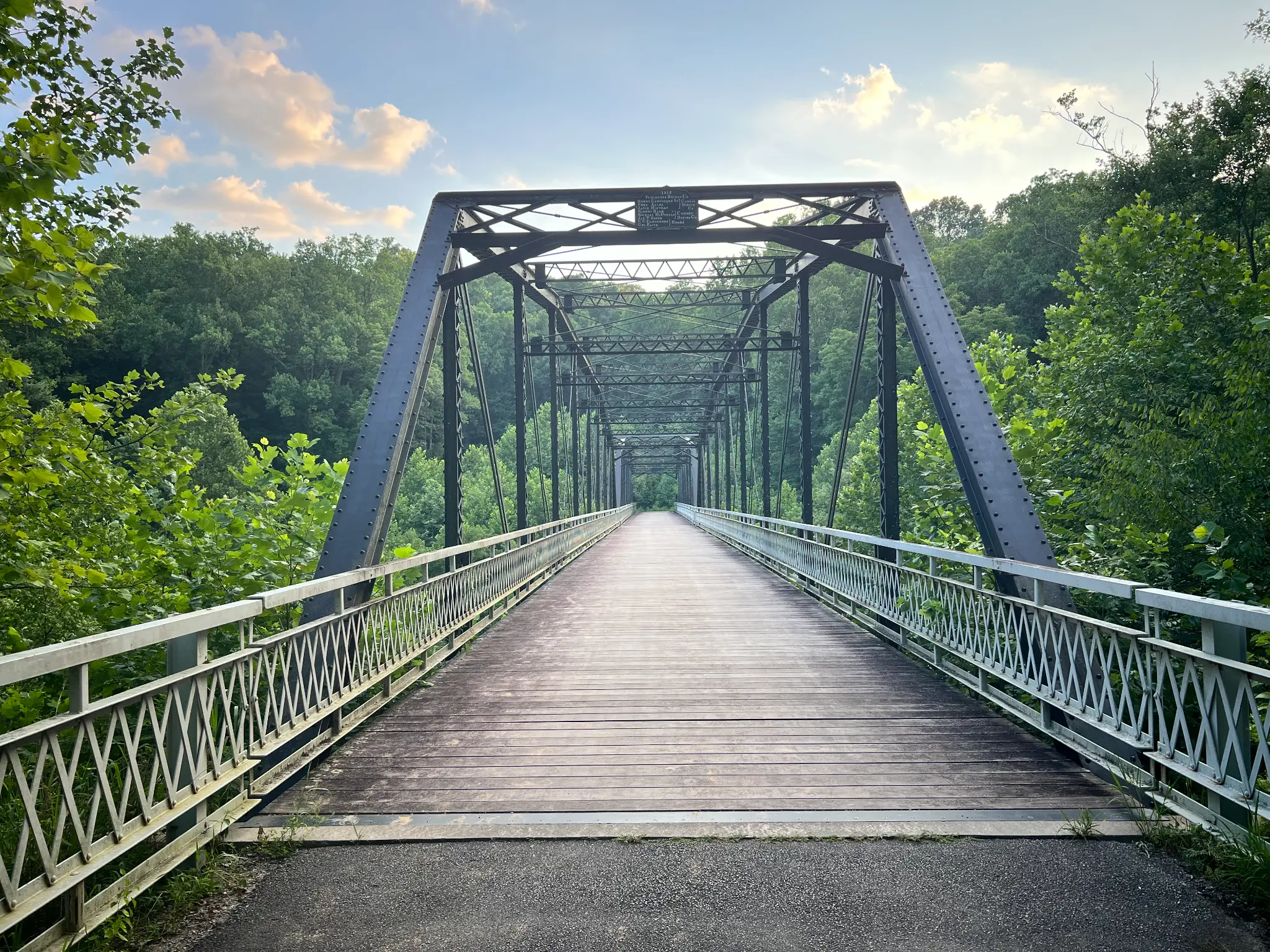
September: The historic Portersville Bridge was relocated and reconstructed to cross 14 Mile Creek and connect Rose Island, Indiana for the first time.
The land is opened to the public as part of Charlestown State Park.
Aerial View: The 1930s Layout of Rose Island, Indiana
For illustrated purposes this vintage map captured the grand scale and diverse attractions of Rose Island during its prime as Indiana's premier summer resort. The layout revealed a meticulously planned destination designed to handle thousands of visitors, featuring a blend of high-end amenities and natural beauty.
Key Features of the Park Layout
The Waterfront Hub
The map highlights the bustling Ohio River activity, showing the massive steamboats that could carry up to 3,000 passengers docked alongside smaller ferries and skiffs.
The Midway and Attractions
Centrally located are the park's mechanical marvels, including the D.B.G. Rose Carousel and the Pony Track, nestled near the grand Cafe Dining Hall and Public Picnic Grounds and Dance Hall.
Accommodations
To the right, the majestic Rose Island Hotel stands as a landmark, while a long row of Summer Cottages lines the riverfront, illustrating that the park was as much a vacation retreat as it was a day-trip destination.
The Walkway of Lights
A distinctive covered walkway arcs through the center of the park, connecting the various pavilions and cottages, a feature whose concrete remains still draw curious visitors to the site today.
Infrastructure and Beyond
The map even includes the utilitarian side of the "island," from the Power House tucked in the back to the ambitious "Proposed Golf Course" stretching into the hills.

Transportation: A Masterpiece of Logistics
Rose Island was a masterpiece of logistics, designed to funnel thousands of visitors from the surrounding tri-state area onto a secluded peninsula.
Steamboats
Massive vessels like the Steamer America—a giant of the river—could ferry up to 3,000 passengers at once from major hubs like Louisville, Cincinnati, and Madison.
Ferries
For those not arriving on the large steamers, local ferries provided consistent cross-river access, acting as the primary shuttles for visitors coming from the Kentucky side of the Ohio River.
The Portersville Bridge
This 19th-century iron bridge was physically moved to the site to provide a permanent link for foot traffic and light vehicles across 14-Mile Creek.
14 Mile Creek Skiffs
Small, maneuverable rowboats and skiffs offered a more intimate way to traverse the creek, often used by locals or those looking to explore the limestone bluffs surrounding the park.
14 Mile Creek Swinging Bridge
A favorite for thrill-seekers even before reaching the rides, this suspension footbridge offered a swaying, scenic entrance into the heart of the "island".
Cars – Park and Hike In
As the automobile became more common in the 1930s, visitors began arriving by car, parking on the mainland and crossing the creek to enter the resort grounds.
Hidden Road
Tucked away from the main thoroughfares, this road provided a secondary, more secluded access point for staff and deliveries to reach the park's internal infrastructure.
The 1937 Flood & The Silence That Followed
In January 1937, the Ohio River reclaimed Rose Island. Submerged under eighty feet of water and buried in river mud, the park didn't just close, it vanished from the conversation. For decades, we've leaned on a comfortable tragedy to explain why: the story of a broken man who lost his fortune to the river and faded into a lonely obscurity.
But the river didn't take everything.
The end of the park was a beginning of a different kind. While the midway went silent, the documented trail of David and Esther Rose continued in ways that the local lore simply missed.
The Strategy
What if the decision to walk away from the island wasn't a result of ruin, but a calculated choice made by a man with ties to twenty-six corporations?
The Evidence
My research into the years after the flood revealed a life that contradicts almost every "hand-me-down" story told about the Roses.
The Survival
While the wooden stalls and roller coasters were left to the forest, the real legacy of Rose Island was preserved in places—and documents—that people stopped looking for.
The 1937 flood is where the park ends, but it's where the most surprising chapter of David and Esther's life actually begins.
What Remains Today at Rose Island, Indiana
As of 2025–2026, visitors to Charlestown State Park can explore the following remaining structures and features:
1. Portersville Bridge (Relocated & Reconstructed)
- Historic iron truss bridge relocated in 2011
- Now serves as the pedestrian bridge to Rose Island
- Not original to Rose Island, but critical to current access
2. Original Bridge Footings & Pilings (Partial)
- Concrete and stone piers from the original swinging footbridge
- Visible near Fourteen Mile Creek
- These are original Rose Island access structures
3. Swimming Pool Basin (Filled In)
- Large concrete pool footprint still clearly visible
- Pool has been filled with gravel for safety
- Original pool walls, shape, and perimeter remain intact beneath fill
- One of the most prominent surviving features
4. Pool Deck & Pool Railings (Partial)
- Concrete pool deck outlines
- Portions of original metal railings visible in places
- Mounting points for diving boards and accessories
5. Rose Island Fountain Remains
- Stone and concrete remains of the decorative fountain
- Still partially intact
- One of the better-preserved ornamental features
6. Walkway of Roses – Stone Arches
- Several stone/concrete arch pillars remain (Partial – Rebuilt)
- These once supported the rose-covered walkway
- Among the most iconic visible ruins today
7. Entryway Pillars (Three Main Columns)
- Two substantial stone/concrete pillars remain
- From one of the main park entry structures
- Clearly visible and often used as landmarks
8. Concrete Building Foundations
Scattered throughout the site:
- Dance hall area (not dance hall itself)
- Hotel area (no remnants)
- Pavilion and concession stand bases
- Flat concrete slabs and a wall remnant
9. Rose Island Sign (Modern Replica)
- Reconstructed replica of the historic Rose Island entrance sign
- Installed by Indiana DNR for interpretation
- Not original, but marks the historic landing area
10. Flood Depth Markers
- Blue circular flood markers
- Show water height from the 1937 Ohio River Flood
- Placed throughout the site
11. Interpretive Signage & Audio Stations
- Indiana DNR historical panels
- Crank-activated audio story stations
- Mark former building locations
12. Former Zoo / Animal Enclosure Footings (Partial)
- Stone and concrete pads believed to be from animal pen areas
- Limited but still identifiable remnants
13. Dock / River Landing Area (Foundations)
- Stone and concrete remains near river edge
- From steamboat landing facilities
- Subject to erosion and seasonal visibility
14. Iron Treadle
- Iron treadle (may have to look for it) from the Dance Hall Nickelodeon
- Hidden among the forest ruins
- A rare mechanical artifact from the park's entertainment systems
15. Concrete Fresh Spring Water Dispensary
- David Rose's marketing at its best
- Underground aquifer (David Rose's account)
- Great Rose Island story behind it
Sources & Archives for This Article
- • 1930 & 1940 U.S. Census Records
- • Louisville Courier-Journal Archives: Society pages and the D.B.G. Rose obituary
- • Indiana State Park Interpretive Records
- • Newspapers.com
- • Ancestry.com
- • On-site Visits
- • Wikipedia
Want to Learn More About Rose Island, Indiana?
Explore the biography of David Rose, view our photo galleries, or read fictional stories inspired by the park's golden age.